Germany - InterCityExpress ICE
For a full scale picture, please click on the picture shown !
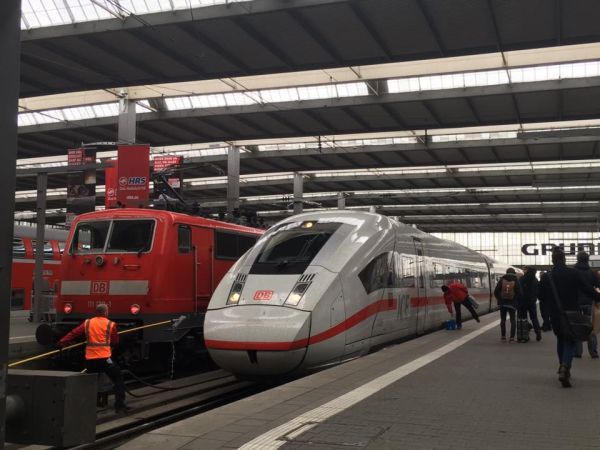
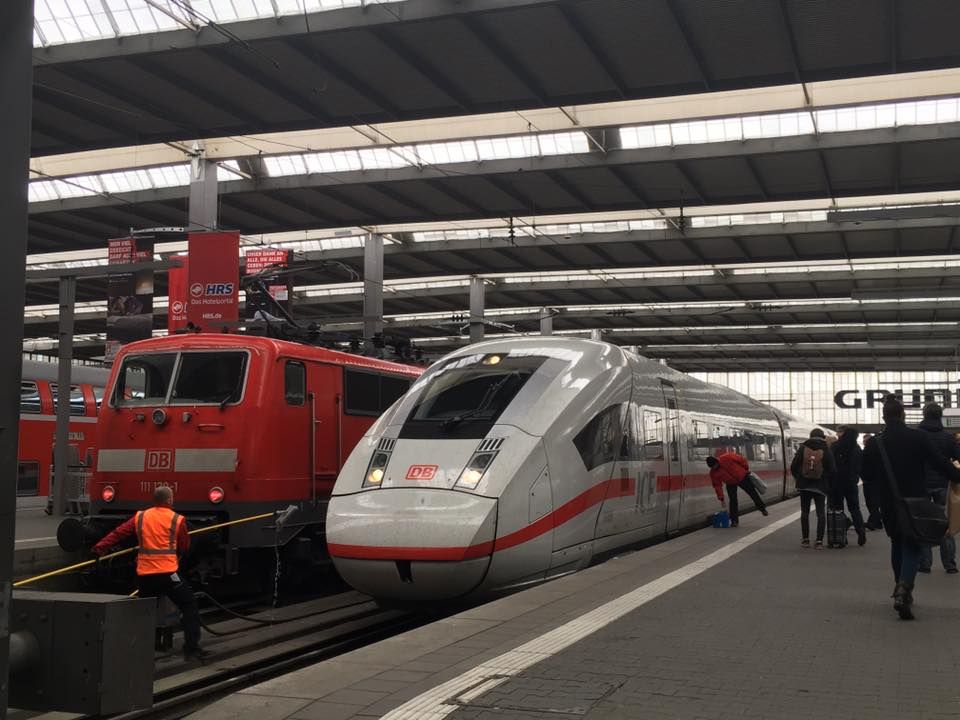
The very newest generation of German InterCityExpress ICE trains, the ICE4 built by Siemens, seen here just after having arrived to München.
Picture 17.4.2017 by Timo Varshukov.
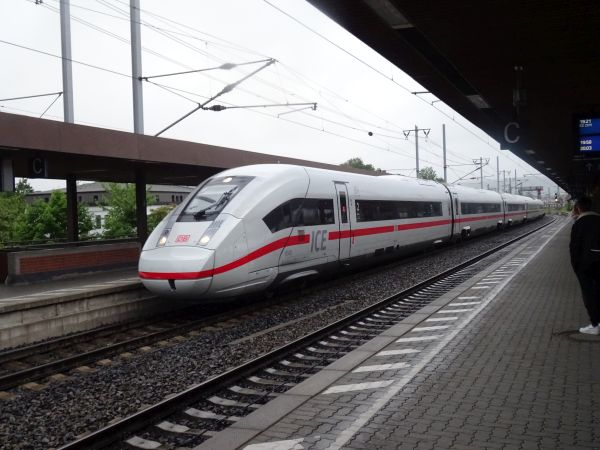
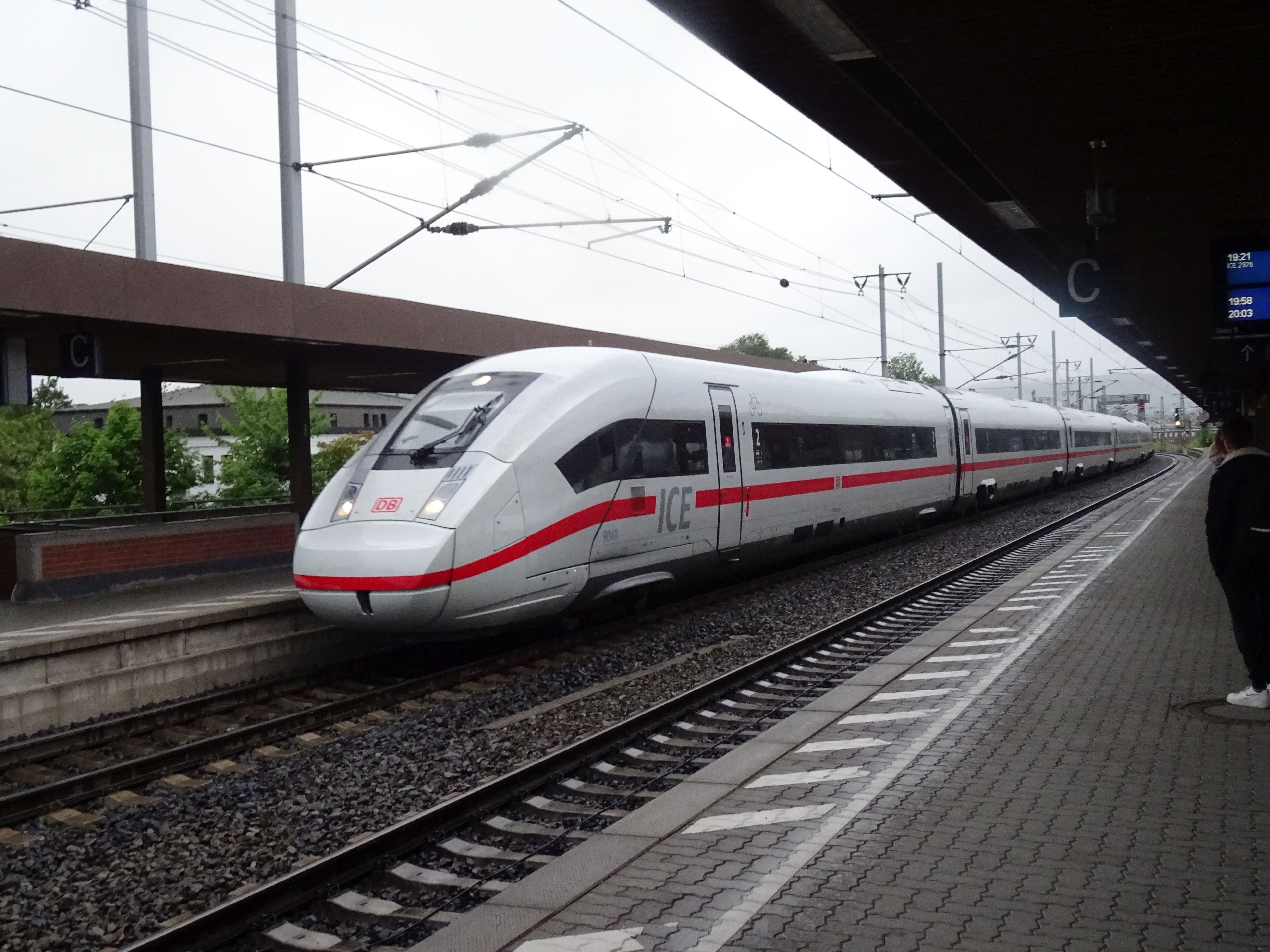
An ICE4 is arriving at Göttingen.
Picture by Ilkka Siissalo 29.5.2022.
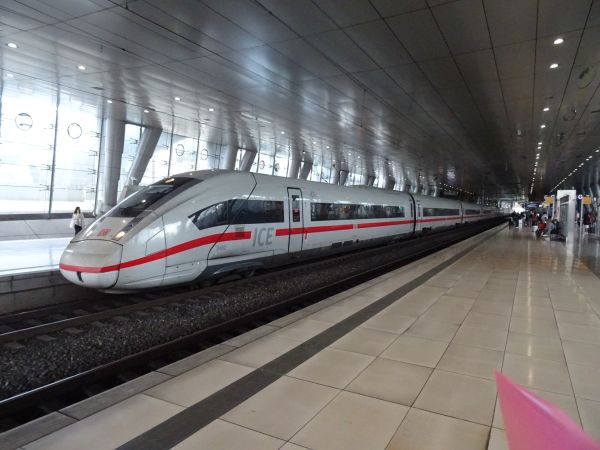
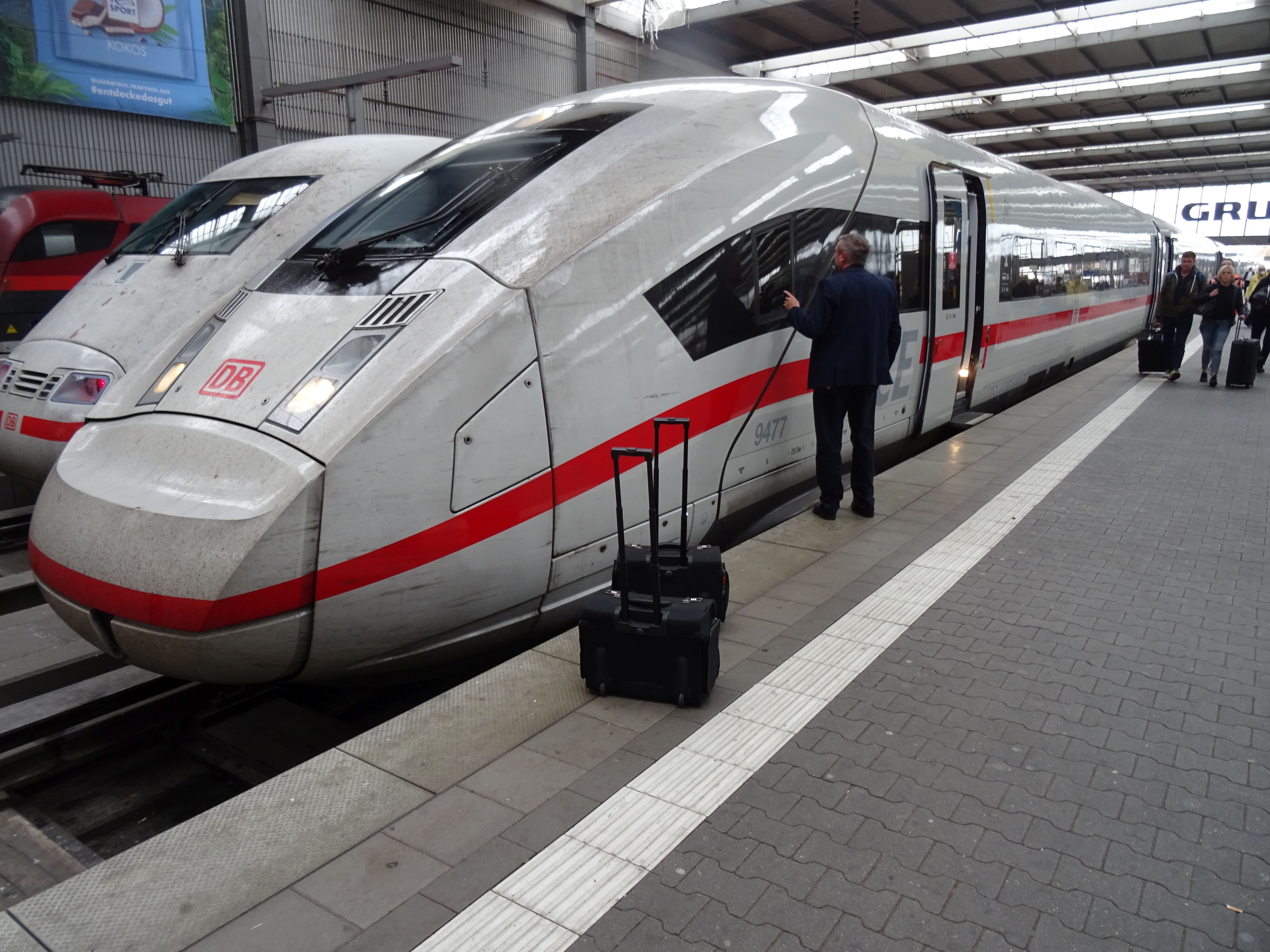
A closer look at one of the new ICE4 trains.
Picture from Frankfurt Flughafen Fernbahnhof by Ilkka Siissalo 29.5.2022.
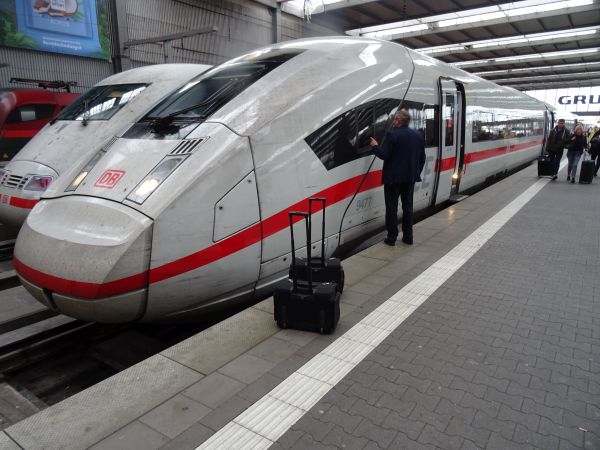
Yet another ICE4. In the background the front of an ICE2.
Picture from München Hauptbahnhof 14.10.2022 by Ilkka Siissalo.
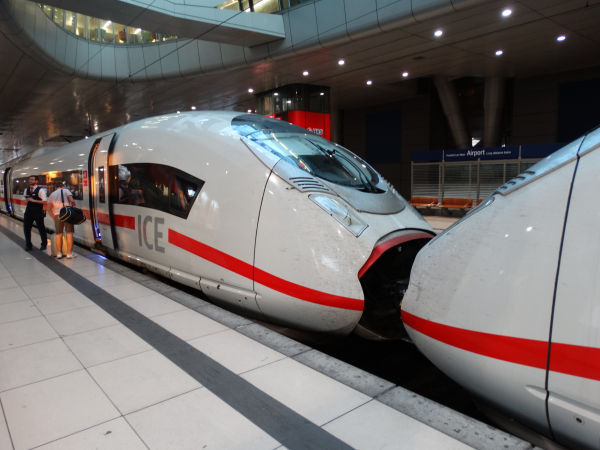
Two of the new ones "kissing". The Br 407 or Siemens Velaro D is a 320 km/h fast
electric multiple unit, which by the DB is marketed as "neuer ICE3", new ICE 3, athough there are also two other older trains
known by the same name ICE 3. These new ones were built 2009-2012, but came into real service only fully in 2014. It is a 200,7 m
long train, which is capable of running not only within Germany, but also on routes for example to Paris in France.
Picture at Frankfurt am Main Flughafenbahnhof 14.9.2016 by Ilkka Siissalo.
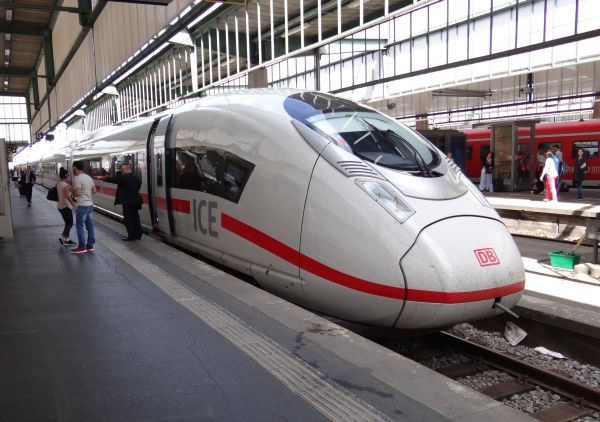
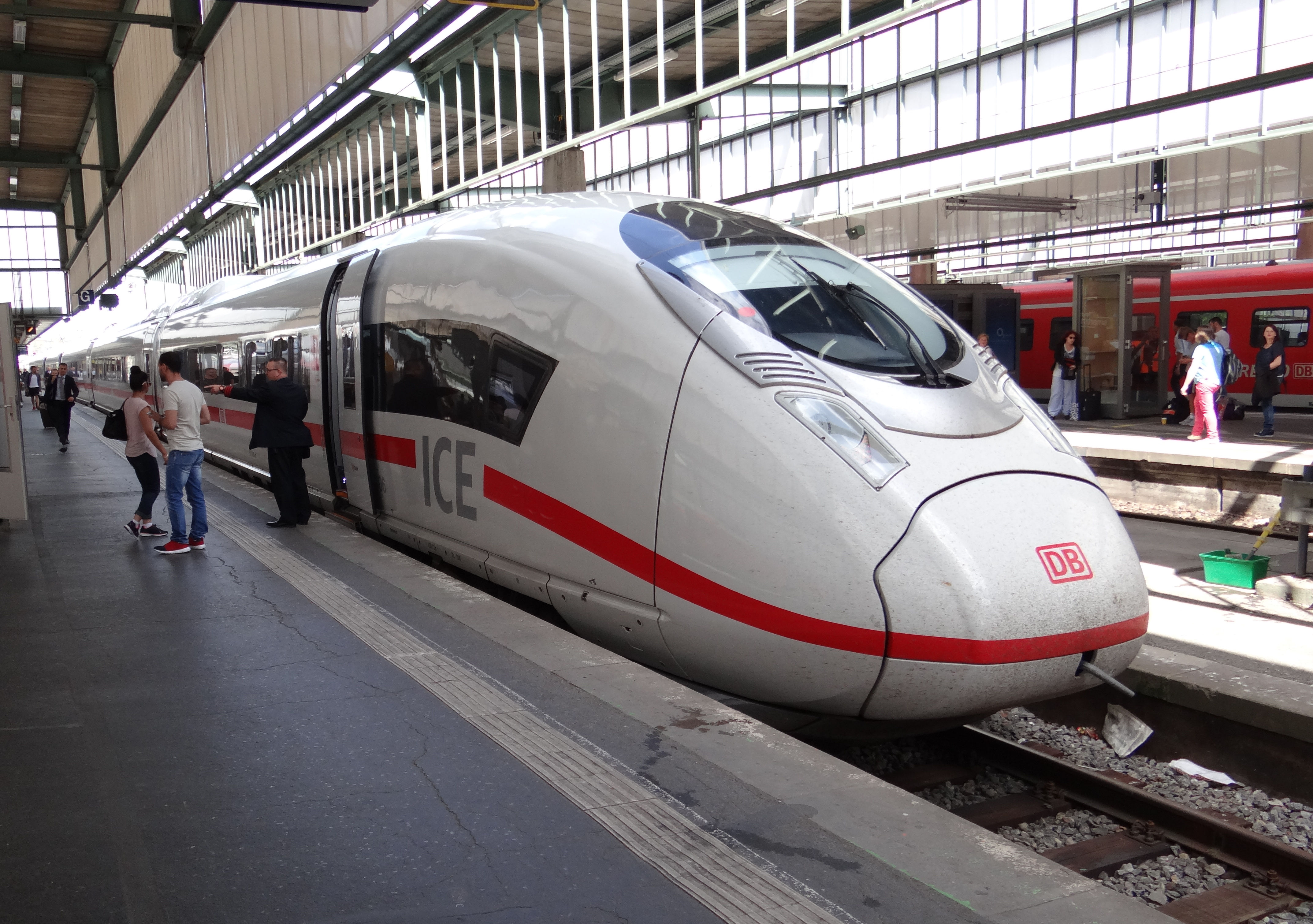
Another class 407 Siemens Velaro D. Picture at Stuttgart Hauptbahnhof 8.7.2015 by Ilkka Siissalo.
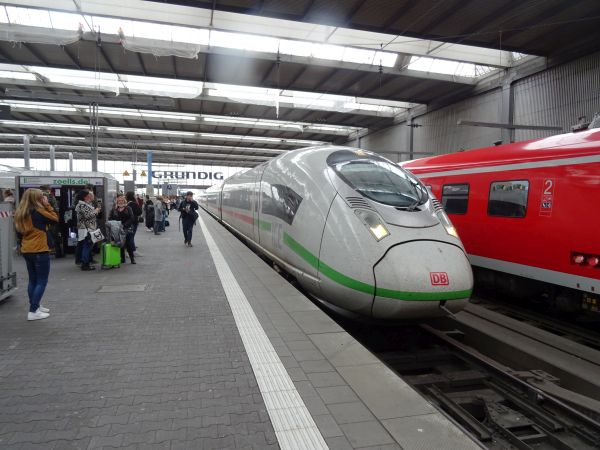
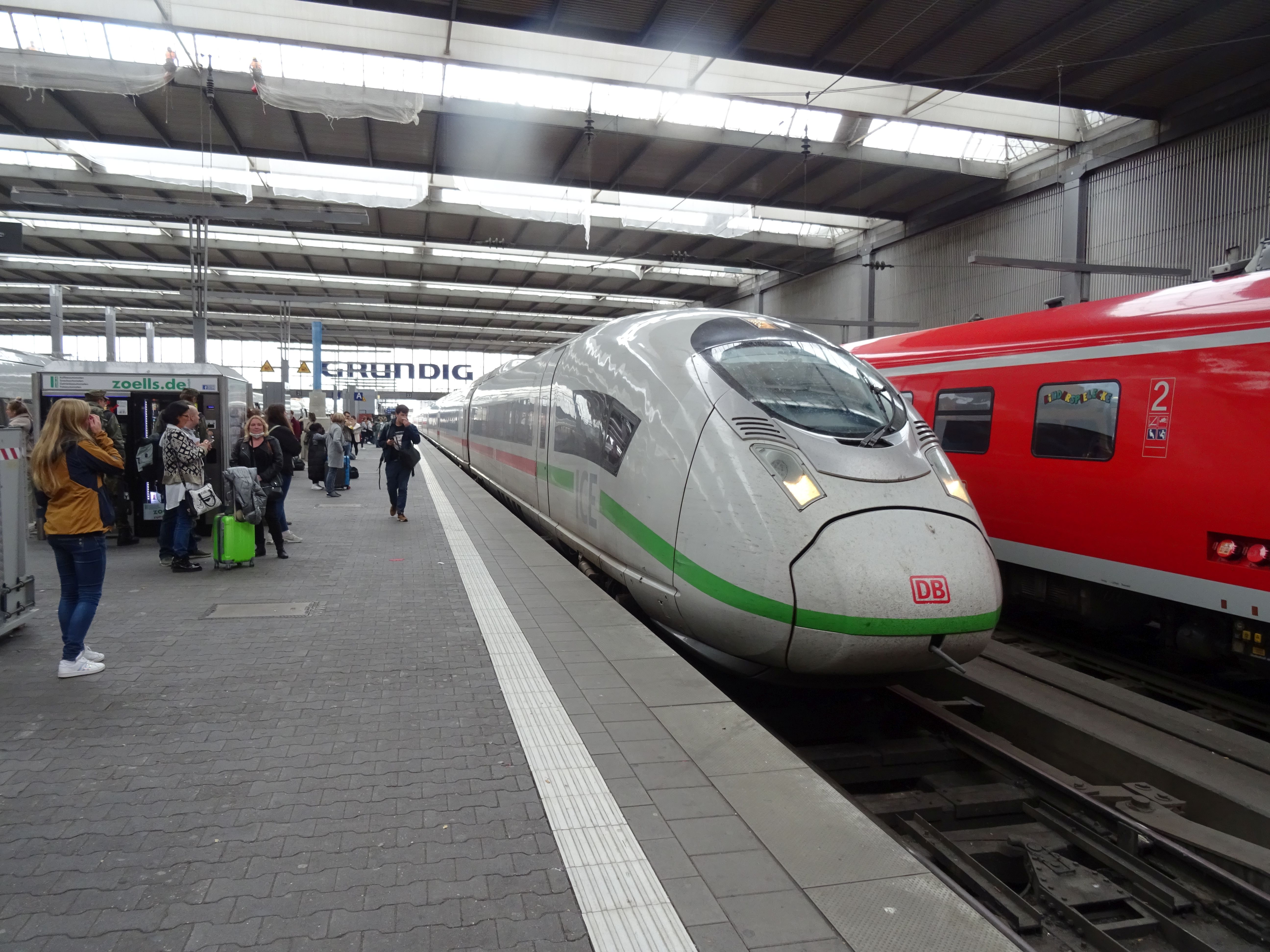
Yet another Br 407 Siemens Velaro. DB has lately been replacing the red sticker bands at the fronts of ICE trains with green in the first
coaches. They are pretending that this gives a more environmentally positive image of the trains. Childish greenwashing in my opinion.
Picture from München Hauptbahnhof 14.10.2022 by Ilkka Siissalo.
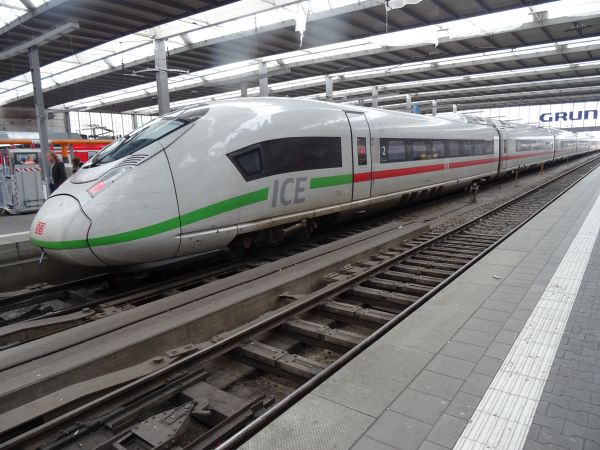
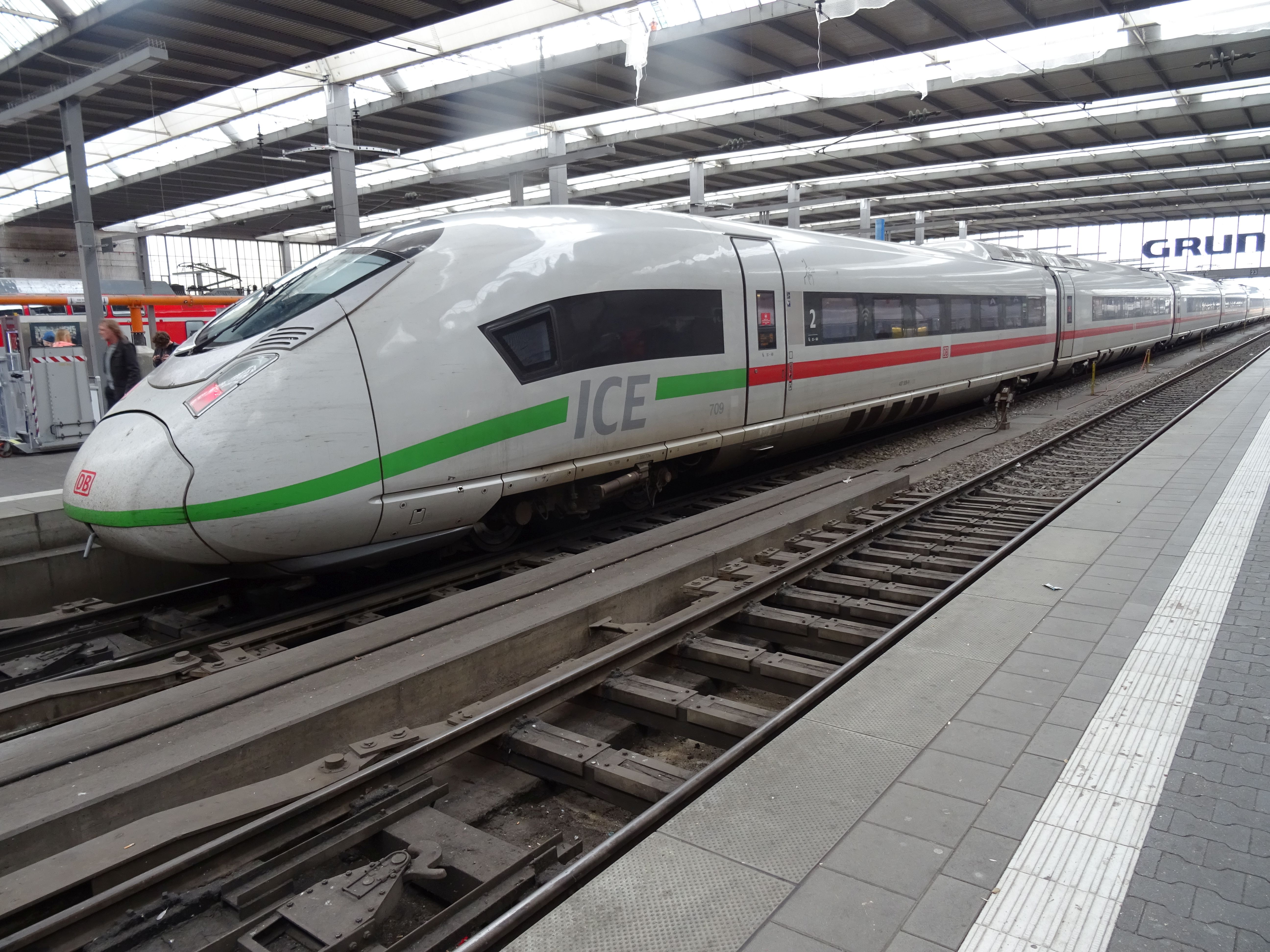
The same Br 407 Siemens Velaro as shown above, but now seen from another angle.
Picture from München Hauptbahnhof 14.10.2022 by Ilkka Siissalo.
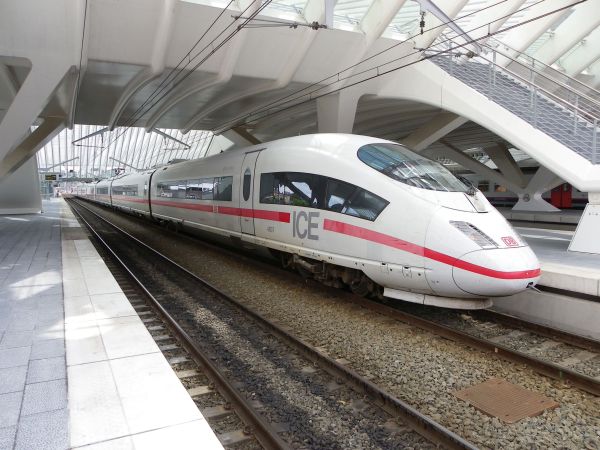
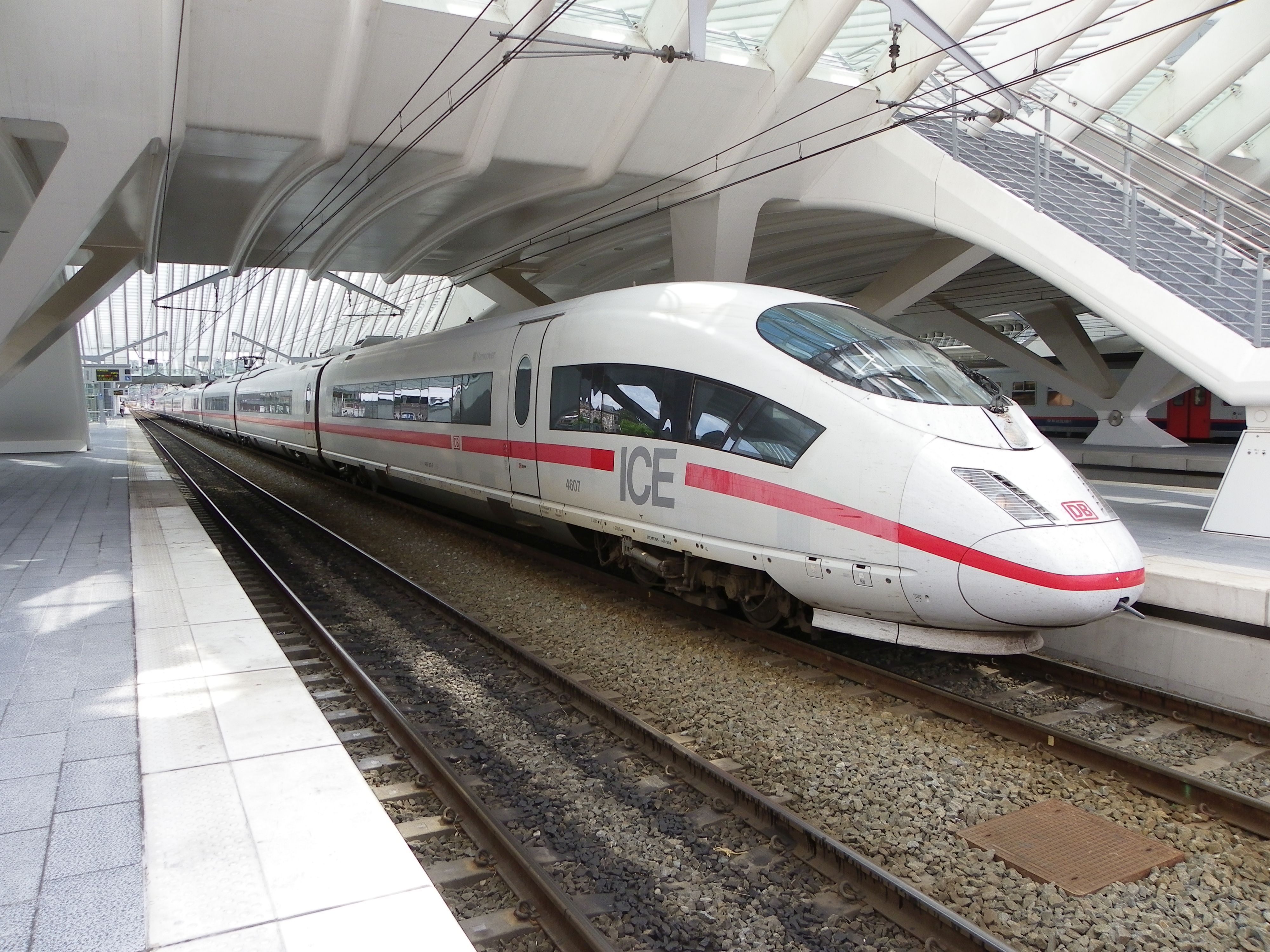
The DB class 406 or ICE 3M (M stands for multiple electric systems) trains are a more modern version of the third generation of ICE
trains and they are used especially on the Germany to Paris, France services. This is a German DB class 406 on its way from Paris
to somewhere in Germany stopping at the Liége (Lüttich) station in Belgium. Picture 10.7.2015 by Ilkka Siissalo.
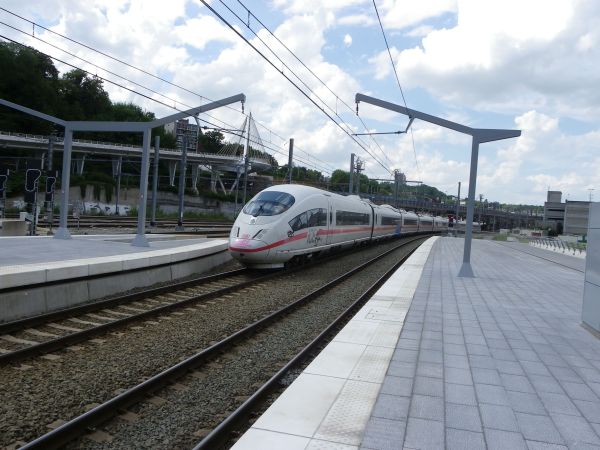
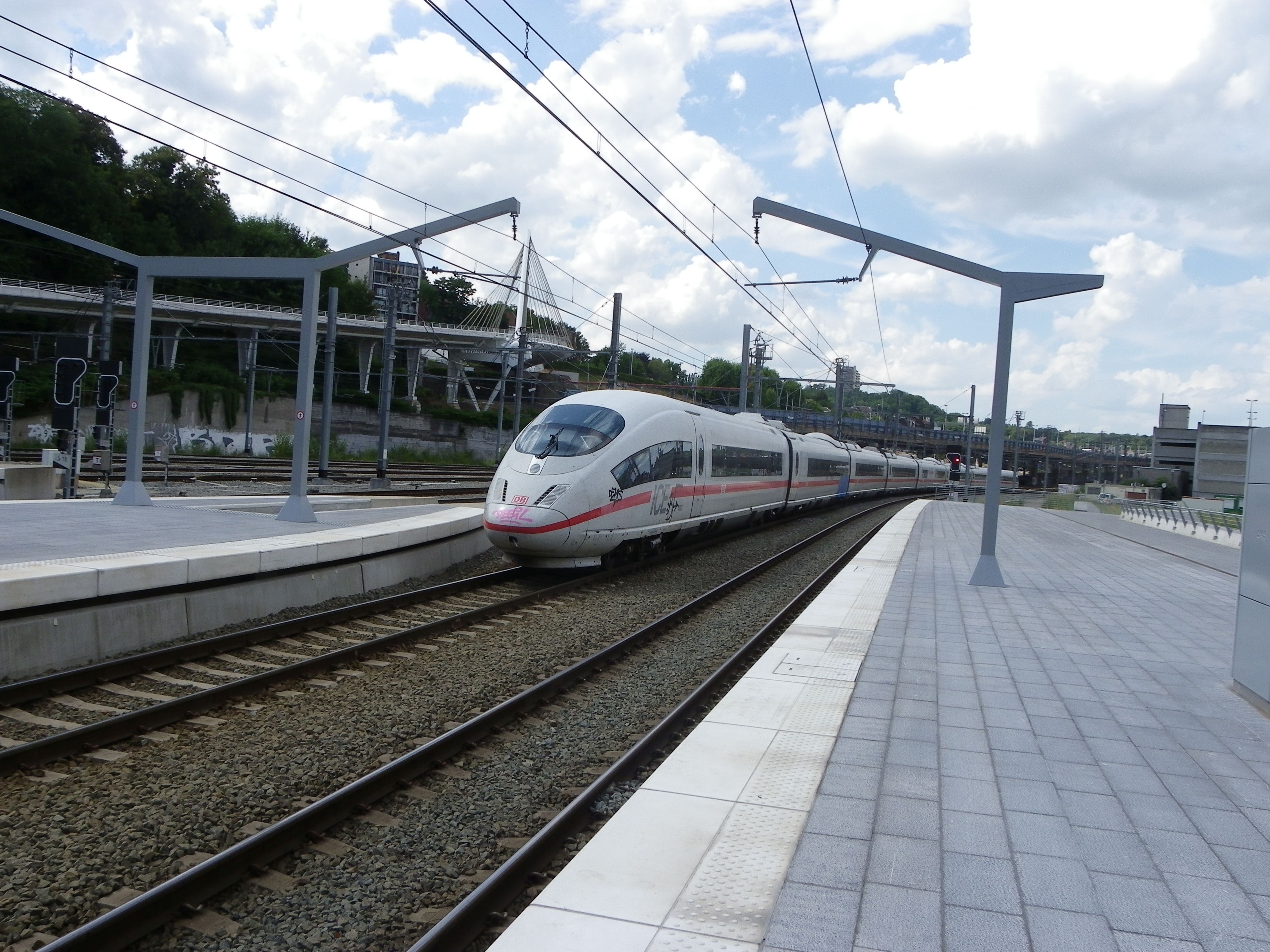
The same DB ICE 3M leaving Liége towards Germany. The poor beautiful train has suffered from an awful graffiti attack on the side
of the second coach from rear and there's also some ugly smudge at the rear front. Picture 10.7.2015 by Ilkka Siissalo.
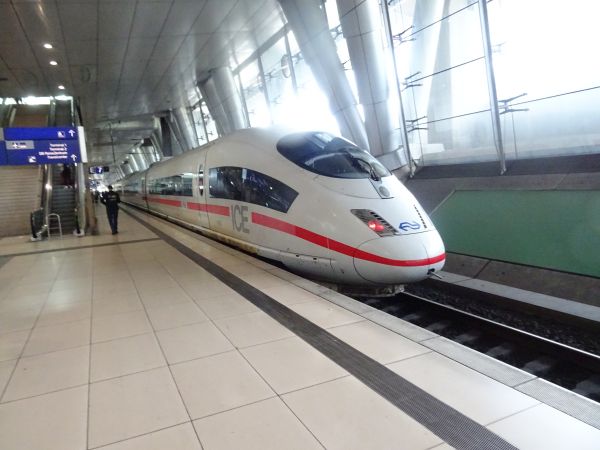
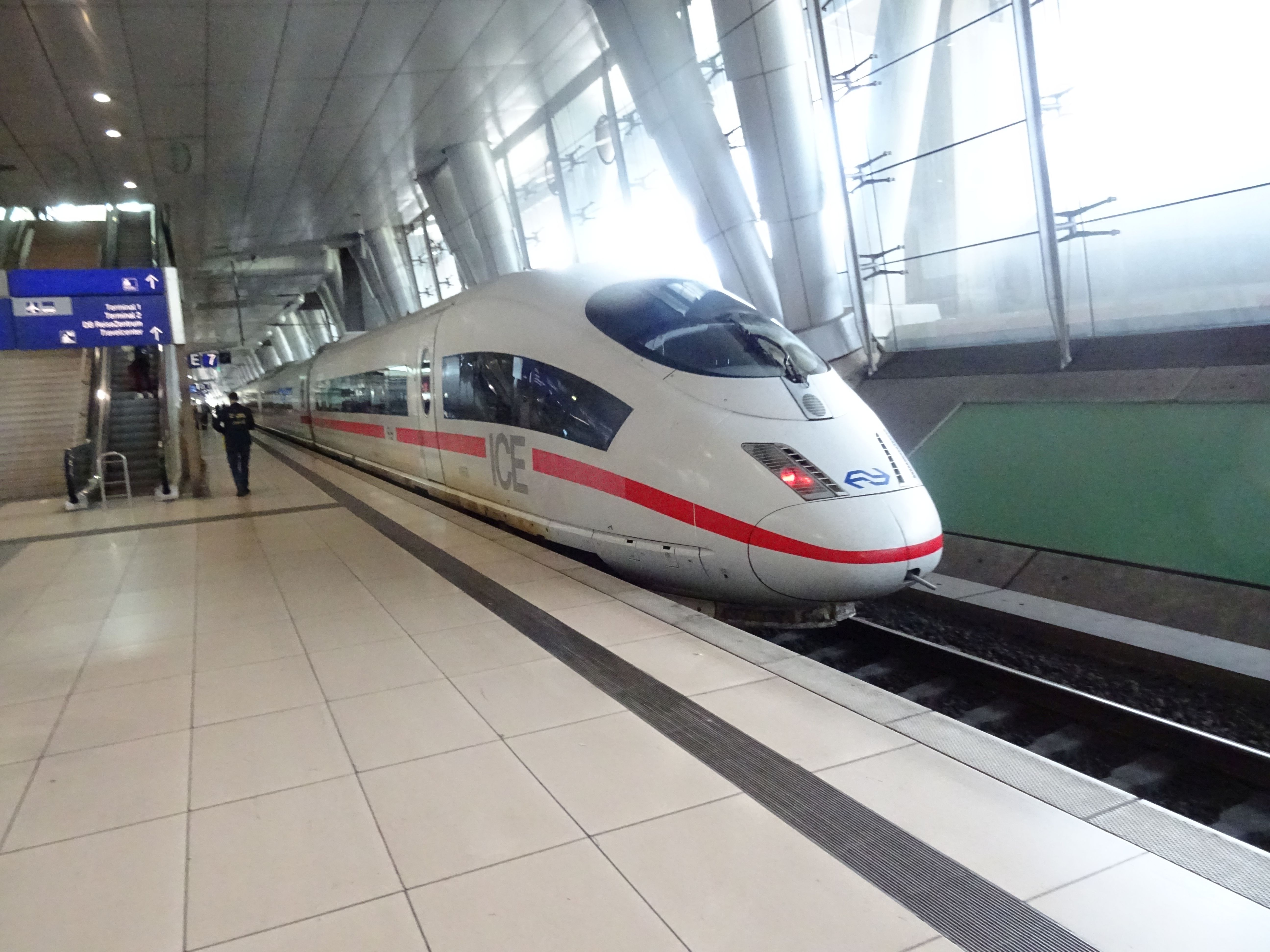
Also this one is an ICE 3M or Br 406, but this train is not owned by DB but by Nederlandse Spoorwegen NS International. NS has three this type of
ICE3M trains. They are all used in international traffic from the Netherlands to Germany and Switzerland.
Picture from Frakfurt Flughafen Fernbahnhof 29.5.2022 by Ilkka Siissalo.
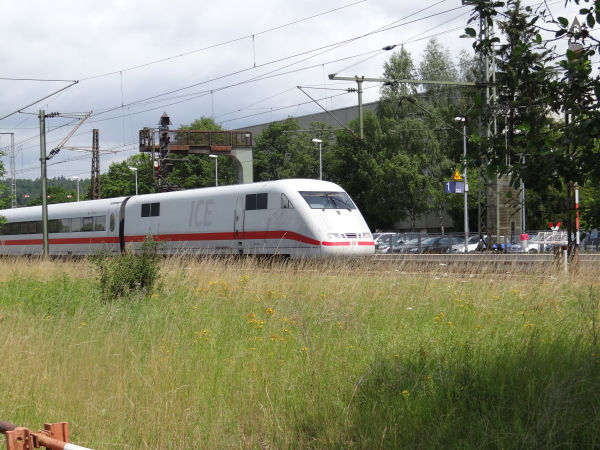
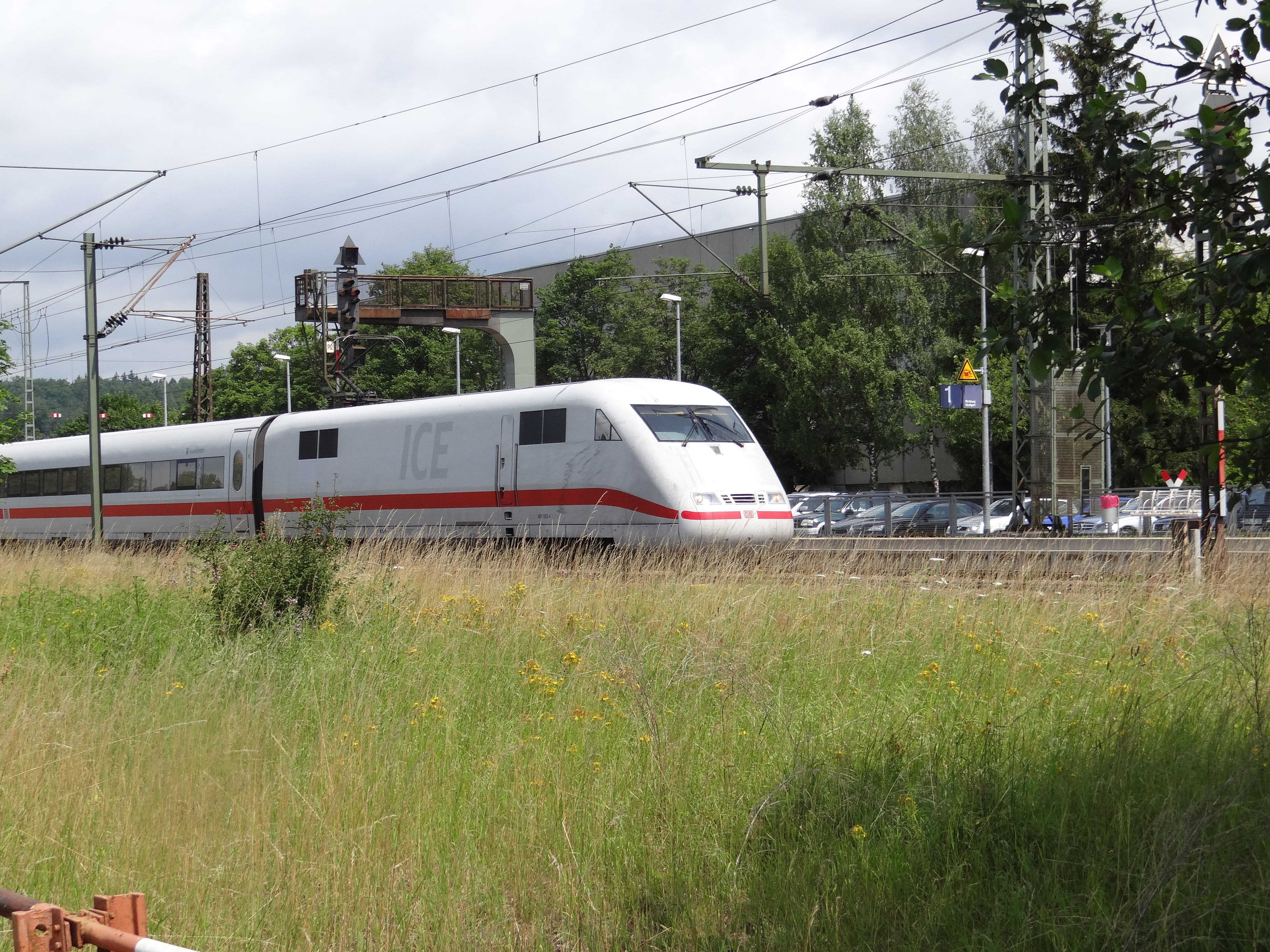
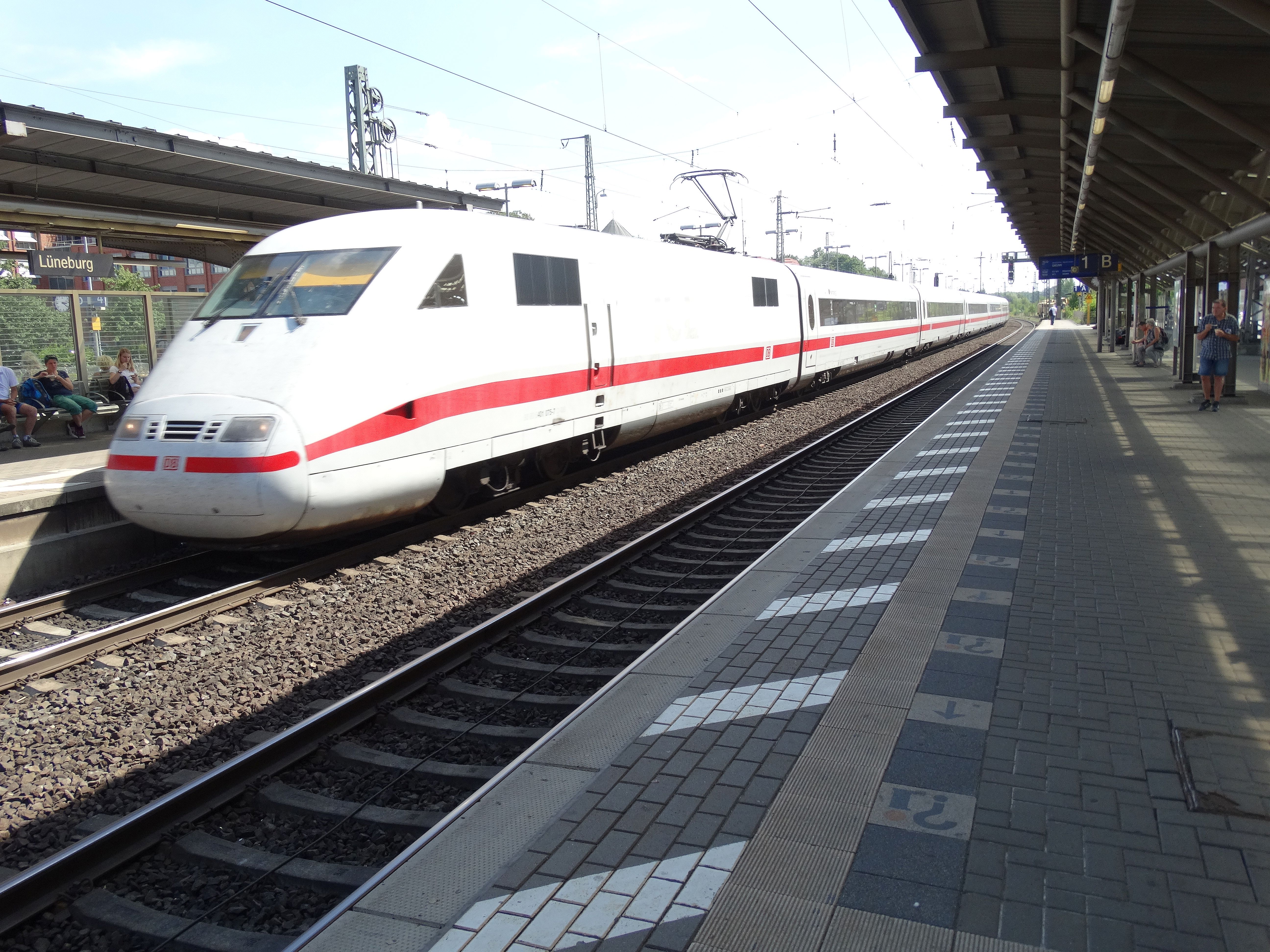
The first generation of the ICE trains was a 14 wagons long rake with a specifically designed locomotive with just one driver's
cab at both ends. It was designated Br 401. This is a Br 401 train in full speed by Amstetten at the Geislinger Steige.
Picture 8.7.2015 by Ilkka Siissalo.
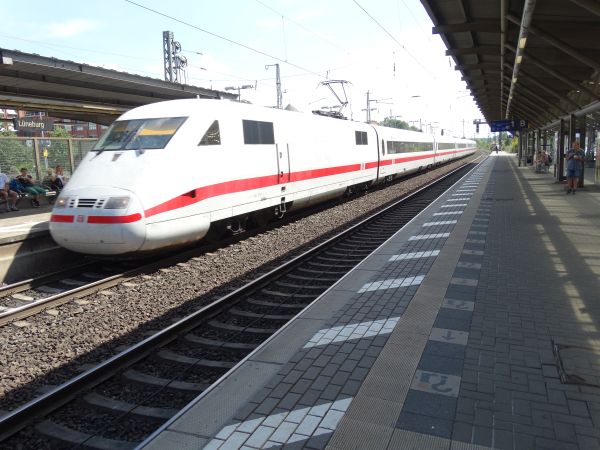
A first generation ICE, Br401, in full speed passing the station of Lüneburg.
Picture 17.7.2018 by Ilkka Siissalo.
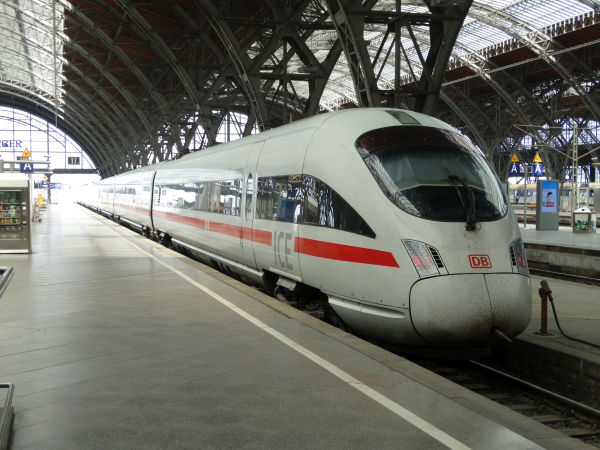
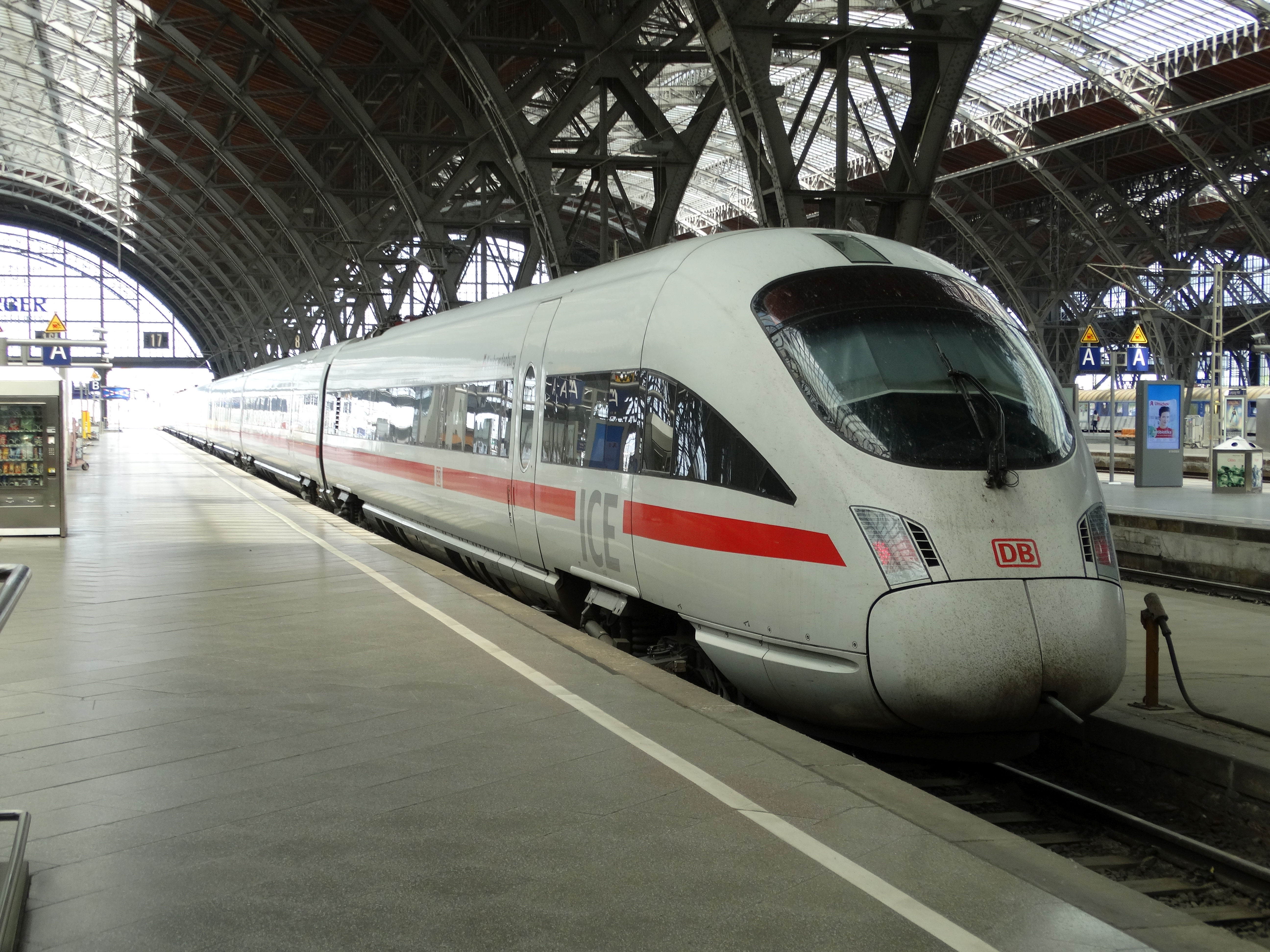
This is an ICE-T train of the class Br411. Deutsche Bahn let develop tilting electric multiple unit trains with ICE level comfort
for curvy, old fashioned train lines especially in the former East German parts of the country, where track quality often was not
on the same level as in the west. ICE-T trains were produced by a consortium including Siemens, Düwag and Fiat Ferroviaria. Fiat
brought in its tilting train technology from its well known Pendolino models. ICE-T trains come in two classes (Baureihe): Br415
is five coaches long and Br411 is seven coaches long. This one is a Br411, here ready to soon leave from Leipzig to Berlin.
Picture from Leipzig Hbf 16.7.2018 by Ilkka Siissalo.
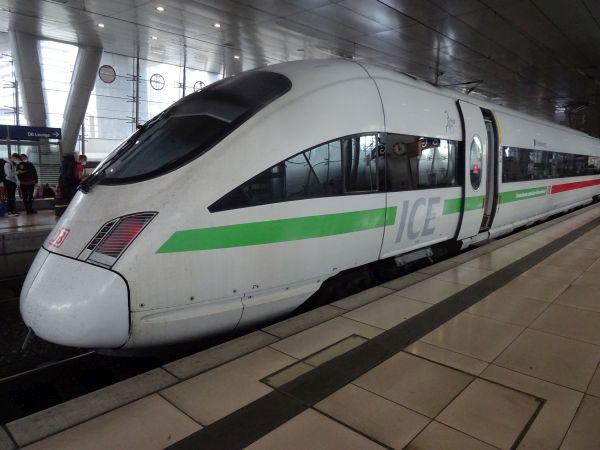
DB has lately started changing a couple of meters of the originally red stripe stickers of the nose parts of their ICE trains from
red to green. This is supposed to emphasize how "green" as a company DB now is. But many people write this off as questionable "greenwashing".
Picture of an ICE-T with a green stripe. This picture was taken 29.5.2022 at Frankfurt Flughafen Fernbahnhof by Ilkka Siissalo.

ICE-L (L stands for low-floor) is unlike all the other ICE trains a purely locomotive powered fixed rake of coaches and not an EMU as
most other ICE trains are. ICE-L trains have been designed and built by the Spanisch company Talgo. Their coaches are shorter than normal
train coaches and only the first and last coaches have a bogie, all the other coaches are supported only by one individual pair of wheels
located between the coaches. DB ordered the trainsets so that they should be powered by new locomotives of the Baureihe 105. The locomotives
are also built by Talgo and Talgo calls the type Talgo Travca. But at the time when these photos were taken, the Br105 Travcas were not
yet accepted for public use, so here we see a brand new Siemens Vectron rented from the Czech operator CD, Czech class 384.
Picture from Düsseldorf 18.4.2026 by Ilkka Siissalo.

This shows clearly how only the first coach has a bogie right after the locomotive. All other parts of the coach set are low-floor
except the small area over the bogie. This shows also clearly how vey much shorter the ICE-L coaches are compared with normal ICE
coaches.
Picture from Düsseldorf 18.4.2026 by Ilkka Siissalo.

A better view of the loaned Czech Vectron, Czech class 384.
Picture from Düsseldorf 18.4.2026 by Ilkka Siissalo.

Note how the gap between locomotive and the first coach of the ICE-L wagon rake has been partly covered.
Picture from Düsseldorf 18.4.2026 by Ilkka Siissalo.

Each short coach in an ICE-L train has just one door..
Picture from Düsseldorf 18.4.2026 by Ilkka Siissalo.

The ICE-L trainsets are designed for speeds up to 230 km/h. Each train is 236 m long (plus locomotive) and when using the talgo Travca locomotives
it has a power rating of only 5200 kW. The middle coaches are just 13,3 m long and each trainset has 17 cars, permanently fixed to each other.
The coaches are almost completely made of aluminium.
Picture from Düsseldorf 18.4.2026 by Ilkka Siissalo.

The far end of an ICE-L is always a driver's cab coach ("driving trailer") with one bogie which looks like the face of the Talgo Travca locomotives.
Picture from Düsseldorf 18.4.2026 by Ilkka Siissalo.

ICE-L trains are also going to operate to the cities of Westerland (on the island of Sylt) and to Oberstdorf in Austria. Both of these cities are
connected with non-electrified railway lines only. In those cases the ICE-L wagonsets are pulled/pushed by Siemens Vectron Dual Mode Br248.500 locomotives.
Here we see one Vectron DM Br248.500 in front of an ICE-L coach rake.
Picture from Niebüll 2.7.2026 by Ilkka Siissalo.

An ICE-L with a Vectron Br 248.500 Dual mode locomotive is ready to leave Niebüll towards Westerland on Sylt using diesel mode.
Picture from Niebüll 2.7.2026 by Ilkka Siissalo.